Why AI Ethics Goes Beyond Algorithms

You can’t talk about AI anymore without someone bringing up ChatGPT. Or maybe Midjourney. Or that image you saw last week of the Pope in a Balenciaga puffer coat. That’s what “AI” means to most people today. A chatbot. A voice assistant. A hyperreal fake. A cool tool that sounds smart, or scary, depending on how you feel about technology.
But AI is bigger than a conversation interface. It’s not just what talks back to you. It’s what ranks, recommends, filters, flags, predicts, diagnoses, optimizes, and automates. The scary part isn’t that AI is smart (somewhat!). It’s that it’s invisible and silent. It works underneath what you see. And by the time you notice it, it’s already made a decision about what you’re going to see next, click next, buy next, or believe next.
And that’s why ethics has to go beyond the algorithm.
The Problem Isn’t Just the Math

Let’s get one thing straight: bias in data is real. But ethics doesn’t stop at cleaning up training sets. You can balance your classes, reduce your variance, monitor for drift, and still produce systems that are harmful, because bias isn’t only statistical. It’s social.
Take facial recognition software. A landmark 2019 study from MIT Media Lab found that three major commercial systems misclassified darker-skinned female faces up to 34.7% of the time, compared to error rates of less than 1% for lighter-skinned males. And these weren’t obscure research models - they were commercially deployed systems being sold to governments, airports, and law enforcement agencies.
Why did this happen? Because the datasets used to train these systems were disproportionately white and male. But also because the teams building them didn’t question the assumptions behind “who this model will work for” or “how this will be used.” The issue wasn’t just technical. It was ethical. No one stopped to ask if this system should be used for surveillance at all.
And that’s the larger point. You can’t debug your way out of a bad value system.
Ethics Lives Outside the Model
When we talk about AI ethics at Sanctity, we’re not just talking about correcting labels in a dataset or adding an audit step in the pipeline. We’re talking about the whole scaffolding around the system:
Who decides what “fair” means?
Who chooses which trade-offs are acceptable?
Who benefits from the prediction
who bears the cost when it’s wrong?
In technical circles, you’ll hear terms like precision, recall, true positive rate, false positive rate. These are performance metrics. But they can’t tell you whether a hiring model has quietly started favoring Ivy League resumes. Or whether a credit-scoring system is amplifying historical redlining practices.
Let’s unpack that last one. In the U.S., redlining was a discriminatory practice where banks denied loans to people in certain neighborhoods, primarily Black and Latino communities - based on zip codes. Today, even if race isn’t explicitly included in an AI model, other variables (like zip code, education level, or income bracket) can act as proxies. And unless someone challenges the model’s assumptions and asks what patterns it’s learning, the bias just gets embedded again, this time with a statistical seal of approval.
This is what we mean when we say ethics lives outside the model. The algorithm might be mathematically sound. But the decision to deploy it, the way it’s used, and who it impacts - that’s where the real ethical complexity sits.
The Hidden Power Structures

Most AI systems don’t arrive as neutral tools. They arrive carrying the interests of the people or corporations who designed them.
For example, a medical diagnostic tool might be optimized to reduce false negatives, ensuring sick patients are never missed. But what if the model’s goal shifts to reducing cost instead? Suddenly, the risk profile changes. Now the system might err on the side of fewer interventions, flagging fewer cases for follow-up to cut expenses. That’s not an engineering decision. That’s a business one.
And business decisions, especially at scale, need oversight that goes beyond quarterly earnings reports. They need public accountability.
Which brings us to the big, uncomfortable question: who decides what’s “ethical” in AI today?
In most cases, it’s a small working group inside a company. Sometimes five or six people. Sometimes ten. A “Responsible AI Council.” Or an “Ethics Advisory Board.” Their output? Usually a policy doc. Something like:
Our models must be fair.
Our data must be inclusive.
We will ensure explainability.
Sounds nice. But how were those definitions chosen? Was the team diverse in thought, background, age, or life experience? Did they bring in people from communities most affected by algorithmic decisions? Was there even one person at the table who wasn’t part of the company?
Let’s assume they did consult widely - an unlikely but generous assumption. Still, the real question remains: Does that internal ethics doc speak for society at large? Does it consider the 16-year-old who spends 6 hours a day on TikTok? The single mom applying for a loan? The rural patient using a telemedicine app? The job-seeker whose resume got filtered out by an AI long before a human saw it?

Let’s not kid ourselves. Ethics frameworks - at least the ones being published and polished today are often the product of internal committees, not communities. And even when companies open up public consultation windows, how representative is that feedback, really? Did it include someone in Nigeria whose search results shape their political understanding? Did it involve a gig worker in the Philippines whose performance score is determined by an opaque system? Did it reach across generations, between digital natives and those who still remember landlines?
Because here’s the thing: ethics is grey. By nature. It’s the average of many black-and-white moral stances. And unless you collect enough diverse input, that grey starts to look like a blur pulled from one side of the spectrum.
The Algorithm Is Not Your Friend

Let’s talk about algorithms that don’t feel like “AI.”
TikTok. Instagram. YouTube. Reels. Shorts. Recommendations. Explore. Scroll. Tap. Loop.
You probably didn’t come to this article from a peer-reviewed journal. Some platform’s algorithm brought it to you. A system predicted based on your past behavior that this content had a high chance of capturing your attention. That prediction wasn’t based on ethics. It was based on engagement.
And that’s the catch: most algorithms in your life weren’t designed to make you a better person. Or a more informed one. They were optimized to increase time spent. More time = more ads = more revenue.
Here’s what that looks like in action:
TikTok’s “For You” feed uses a recommendation algorithm trained to maximize completion rate—how likely you are to watch a video to the end.
Instagram’s Explore page combines collaborative filtering and neural embeddings to identify what keeps your eyes on the screen.
YouTube’s algorithm accounts for watch history, click-through rate, and session duration to serve “relevant” content that keeps you on the platform.
None of these systems are inherently evil. But they’re engineered for one metric: attention. And over time, that metric starts to override everything else.
Does the content make you anxious? Angry? Addicted? Does it erode your worldview or reinforce your biases? Those questions aren’t part of the loss function. The model doesn’t ask if you’re better for having watched 43 reels in a row. It only tracks whether you kept watching.
This is the ethical blind spot baked into nearly every consumer-facing algorithm today.
What Ethics Should Ask
Ethics in AI can’t just be about model interpretability or fairness audits. It has to ask harder questions:
Is the objective of this model aligned with the well-being of the user, or just the business?
Was the user part of the design process?
If this model fails, who is harmed, and who still profits?
Does the system allow people to challenge or understand decisions made about them?
Today, most of these questions go unanswered - not because people don’t care, but because few systems have been built to gather this input meaningfully and at scale.
What We’re Doing at Sanctity
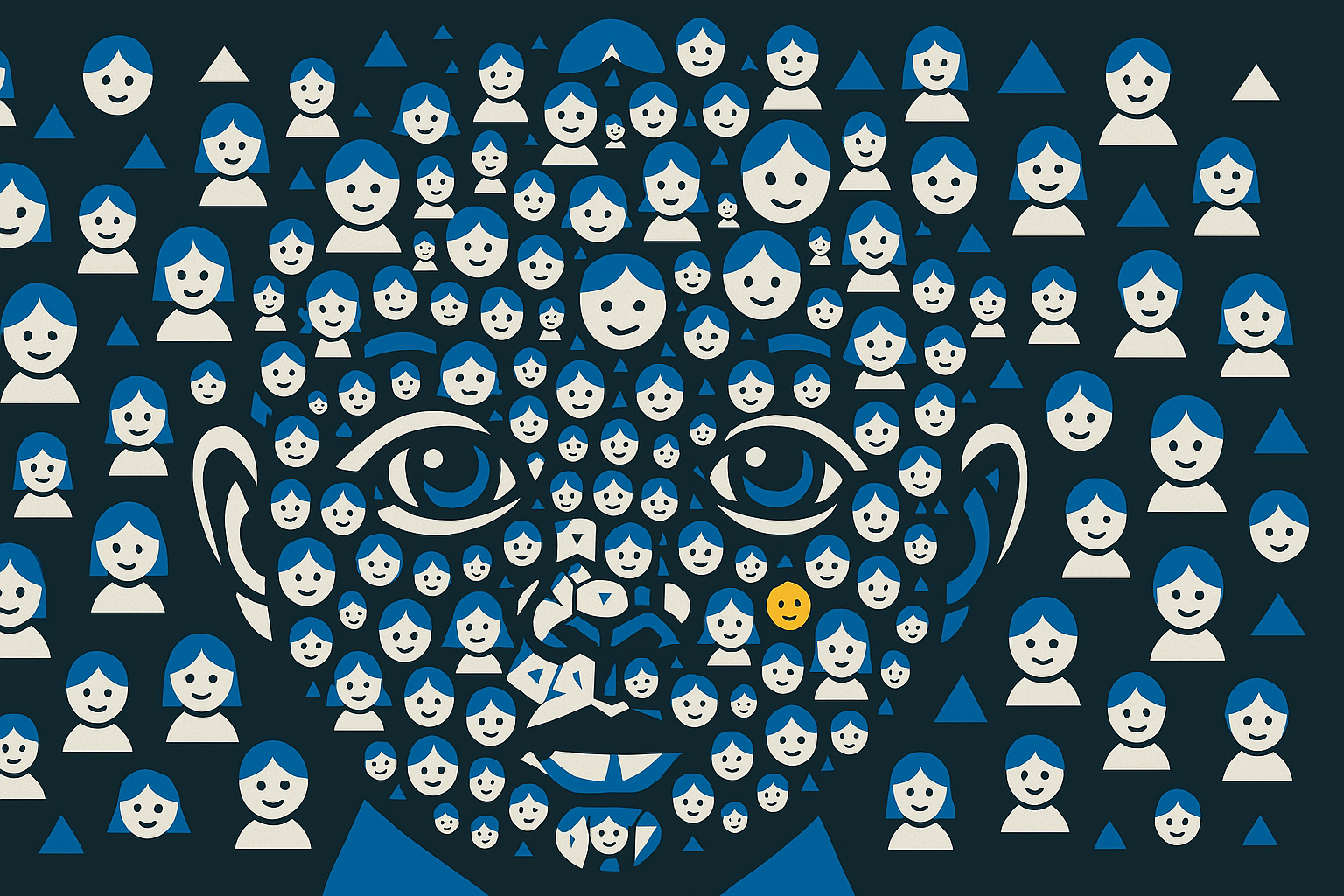
At Sanctity, we’ve built an interactive space where people from all walks of life can confront real ethical dilemmas and contribute their moral instincts. We use games, scenarios, and structured discussions not to dictate what’s right, but to collect a landscape of human judgment. A living repository of moral signals.
Why? Because we believe ethical frameworks shouldn’t just be declared—they should be discovered.
That doesn’t mean the loudest voice wins. It means that over time, through repeated engagement, we begin to see patterns. We see where there’s consensus. Where there’s tension. And where a collective “grey” starts to emerge - one that includes a broader span of moral experiences than any policy doc ever could.
It’s not perfect. But it’s honest. And it’s transparent.
We also know that algorithms are here to stay. And they will continue to grow in power and presence. So instead of pretending ethics can be solved behind closed doors, we’re inviting everyone—engineers, artists, students, CEOs, skeptics—to help shape the boundaries together.
You’re Not Here by Accident
If this article reached you, there was a system behind it. A model predicted, based on your clicks, your scrolls, your history, that this might resonate. That prediction brought you here.
And now you have a choice.
You can close this tab. You can move on.
Or you can be part of what happens next.
Not everyone will participate in defining ethical AI. But if you do, your voice will help shape something better. Because the only thing worse than an unregulated algorithm is an ethics framework built without you in it.
We believe the moral weight of the future shouldn’t sit on five people in a boardroom. It should sit across thousands. Across generations. Across cultures. And that starts with you.
Sanctity is built on one idea: AI should be taught by all of us, as equals.
Be the Voice ›