The Illusion of Mastery: How AI Is Replacing Learning with Performance
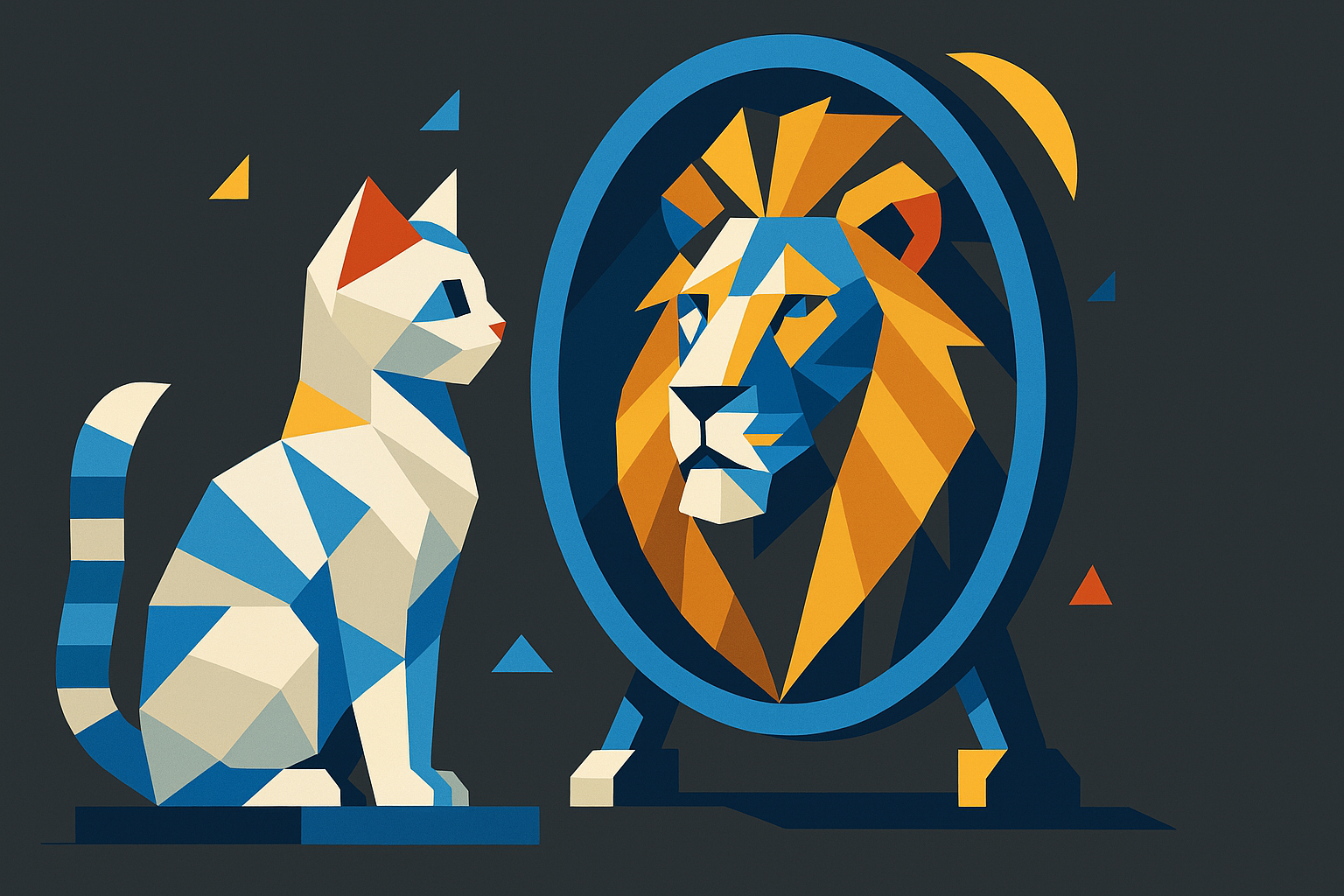
We’ve entered an era where anyone can appear to know, without truly understanding. Students can now write essays they didn’t think through, solve equations they never studied, and ace assignments with tools that do most of the heavy lifting. It’s efficient. It’s seductive. And it’s quietly dismantling one of the most important human faculties we have: the ability to struggle, learn, and grow.
At Sanctity, we’re seeing a growing gap between what people can produce and what they actually know. And nowhere is this more visible—or more dangerous—than in how young minds are using AI to shortcut the learning process before they’ve ever had the chance to build it for themselves.
The Disappearance of the Learning Curve

We remember a time when the process mattered. When understanding a topic meant spending hours in the discomfort of not knowing—rewriting, questioning, trying, failing. Homework wasn’t just a checkbox; it was a quiet space where resilience took shape.
Today, students often don’t need to go through any of that. They can type a vague prompt and receive a polished, well-structured, grammatically sound answer in seconds. They don’t have to reread the textbook. They don’t have to sit with uncertainty. They don’t even have to ask the question twice.
It may look like learning. But it’s performance. And it’s being rewarded.
We now see learners receiving full credit for responses they didn’t craft, praised for clarity they didn’t build, and moving ahead with a sense of mastery that’s—at best—borrowed. The very act of outsourcing thinking, early in one’s life, before cognitive maturity has fully formed, plants the seeds for long-term dependency.
The muscle of critical thought doesn’t develop when the machine lifts the weight for you.
A Shortcut That Feels Like Progress

There’s a reason this feels so natural, so safe. AI is not just efficient—it’s emotionally intelligent. It reflects back fluency, style, polish. It knows how to structure arguments, mimic tone, and smooth over gaps. And for a young person unsure of their voice, their knowledge, or their abilities, this feels like validation. Encouragement. Even empowerment.
But that comfort can quietly become a crutch.
This is the silent seduction of AI—not in what it promises outright, but in how it quietly replaces discomfort with assurance, and exploration with execution. The student doesn’t just skip the hard part; they skip the very part that makes them capable. And because the results look good, no one asks what’s missing underneath.
Like all seduction, it flatters before it disarms. It gives just enough to keep you close. And by the time you realize what you’ve given up—your judgment, your struggle, your original voice—it’s already woven into the way you operate.
When Mastery is an Illusion, Confidence Becomes Hollow

The most worrying part isn’t that students are using AI. It’s that they’re using it so early, and so often, that they’re developing an internal belief that they no longer need to understand.
We’ve met young professionals who write AI-generated essays, submit AI-written applications, and rely on AI suggestions during real-time tasks—without ever fully grasping the subject. And when everyone begins to do the same, the uniqueness of human learning collapses into a shared, shallow pool of answers.
Even more concerning? The illusion often goes unchallenged. It feels like they’re achieving. It looks like progress. But the foundations are paper-thin. There is no framework underneath. And without that framework, when something breaks—when the AI gives a wrong answer, or when a real-world problem has no prompt—the response is paralysis.
We’ve seen this before.
Calculators replaced mental math. GPS replaced spatial awareness. Now, AI is replacing reasoning itself. But unlike calculators or GPS, this tool doesn’t just replace a task. It replaces the feeling of “I figured it out” with “I got it done.”
One sharpens you. The other dilutes you.
Protecting the Process, Not Just the Output
At Sanctity, we’re not interested in resisting AI. We’re building with it. We see its potential. We also see its power to shape behavior in ways that are harder to detect—and harder to reverse.
That’s why we believe young minds deserve more than just access. They deserve guidance.
They deserve to be told: “This tool is powerful, but it’s not a replacement for your struggle. It’s not meant to rob you of the practice that gives you real intelligence.” We need to help them understand when to use AI—and more importantly, when not to. And that doesn’t happen with policy alone. It happens with awareness, design, and education that emphasizes how to think, not just how to prompt.
We’ve begun embedding these values into our own tools. AI that encourages feedback loops. Systems that invite friction, not just flow. Interfaces that respect curiosity more than completion. We believe these are the subtle design choices that can guard against passive consumption and protect the human inside the loop.
Because if the next generation skips the process, we don’t just lose thinkers—we lose builders, questioners, mentors, leaders.
Mastery isn’t about sounding smart. It’s about becoming sharp. And no machine can do that for you.
Sanctity is built on one idea: AI should be taught by all of us, as equals.
Be the Voice ›